
Introduction
This report, titled “South African Vitiligo Patient Experience,” investigates what it is like for people with vitiligo – how they first notice it, how much it affects their lives, how they get help, and what could be done to improve things. Vitiligo is not just a skin problem; it can impact a person’s life in many ways, both seen and unseen.
This report aims to explore these impacts and suggest ways to support those with vitiligo better.
The report aims to raise awareness about vitiligo and improve the lives of those affected by it. We will explore the experiences of South Africans with vitiligo and work towards a more inclusive society..
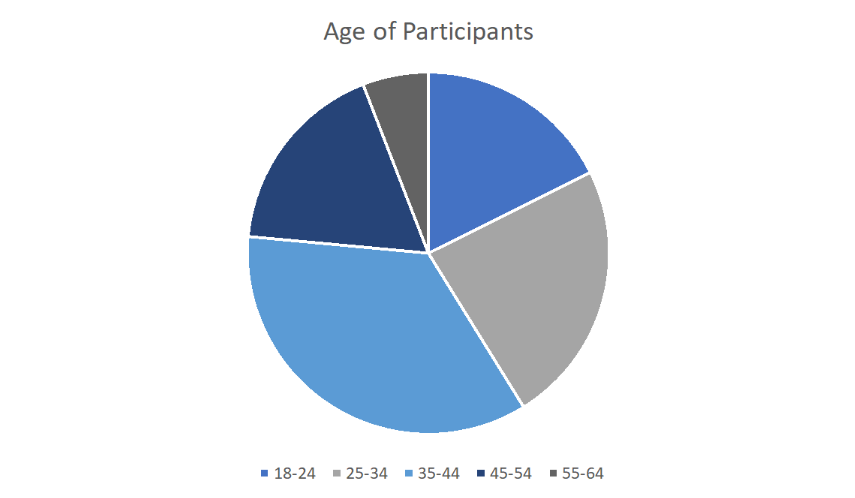
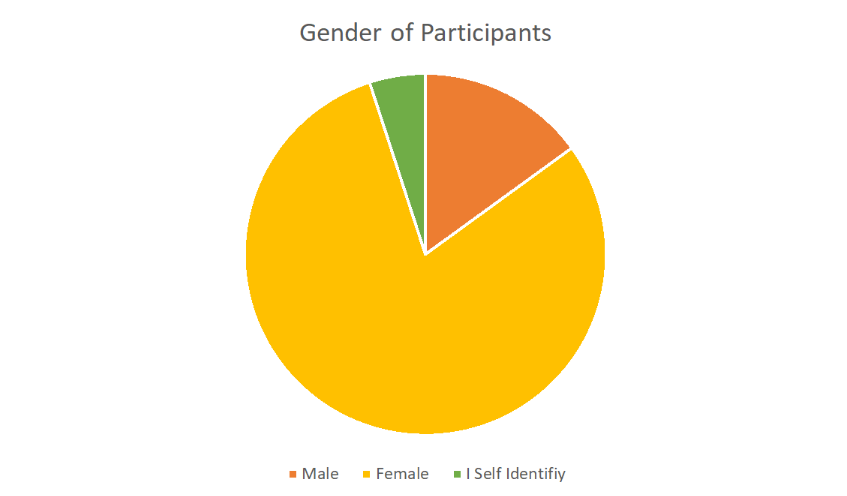
In this comprehensive survey, 20 individuals generously shared their experiences with vitiligo. Participants of varying ages took part in the study, with the majority falling in the 35-44 age range. The 55-64 age group had the lowest number of participants. On average, the participants had been living with vitiligo for 17.5 years, with a range of 3 to 33 years for their experiences with the onset of the condition. This striking range of perspectives and experiences among our participants forms the cornerstone of our understanding of vitiligo’s impact. It underscores the importance of considering this diversity when exploring potential improvements in vitiligo care and support.
Observations of Vitiligo Signs, Their Body Extents and Effects
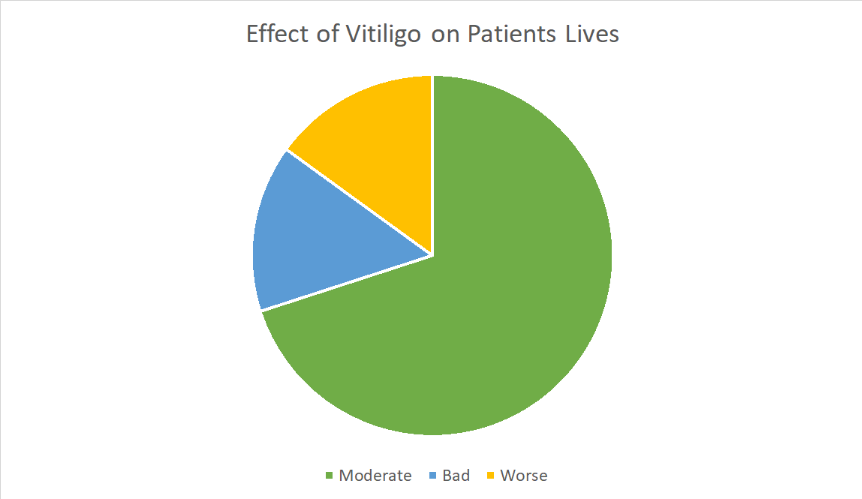
People’s initial observations of their vitiligo exhibit significant variation. In 15% of participants, vitiligo onset occurred during pregnancy, while others discovered it between the ages of 4 and 31. Participants reported discovering their vitiligo on various parts of their bodies, with 15% indicating its emergence on the knee, 10% on the legs, and 5% on the mouth, hands, and genitalia. When asked about the extent of their vitiligo (i.e., how much of their body is affected), the majority (31.6% of the participants) rated it as a 7. Regarding the impact of vitiligo on appearance, self-esteem, social interactions, and employment, 70% of participants reported a moderate effect. In comparison, 30% expressed that it had a bad or even worse effect.

Treatments and Professional help
The responses regarding vitiligo treatments show a wide range of experiences among participants. While some participants haven’t tried any treatments, others have explored various options. Initially, traditional ceremonies were effective for some in stopping dark and itchy spots. However, there were mentions of treatments losing effectiveness over time.
Several participants reported that they received medical treatments, such as taking pills and visiting a dermatologist. Financial constraints sometimes interrupt these treatments. Some users reported mixed results with creams and ointments, like Dovate and Demovate. Others found varying degrees of success with UV light treatments and steroid creams.
Notably, Hair growth in affected areas may have a potential link with skin repigmentation in vitiligo treatment. Diverse experiences highlight the need for tailored and accessible options to support those living with the condition.
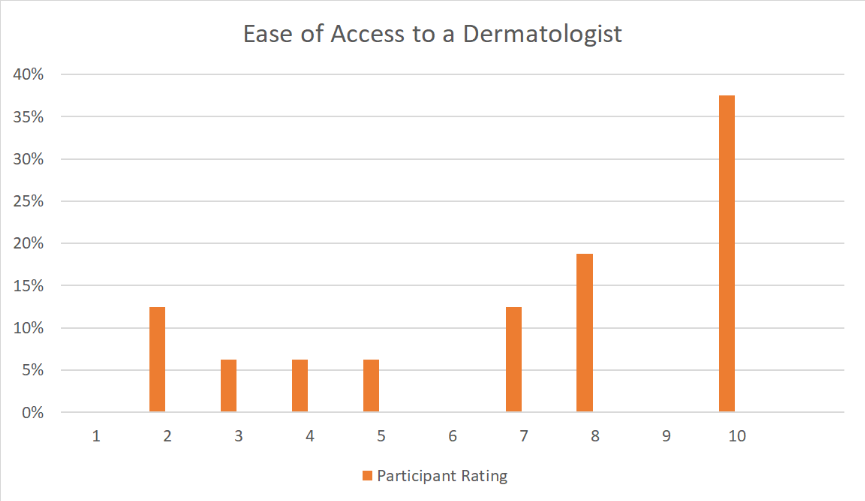 Participants’ ratings varied depending on whether they had seen a dermatologist and how easy it was to access one. The survey revealed that 37.5% of respondents rated their access to dermatologists as easy, with a score of 10. This indicates that they can easily seek the services of dermatologists. Moreover, 18.75% of participants gave a rating of 8, indicating a hassle-free experience. Additionally, 12.5% of respondents rated their ease of access as a 7. On the other end of the spectrum, a smaller percentage of participants, 6.25% each, rated it as a 3, 4, or 5, signifying a somewhat more challenging or cumbersome process for a minority of individuals. The study shows different levels of access to dermatological care, with positive and challenging experiences in vitiligo management.
Improvements
The responses to the question regarding potential improvements in the care of patients with vitiligo highlight several common themes and insights.
Accessibility and Affordability: A recurring theme is improved accessibility to care. Participants desired free consultations, medications, and sunscreen to make vitiligo treatment more affordable and accessible to a broader demographic. The financial burden of accessing care was a concern for many respondents.
Awareness and Education: participants emphasized the importance of increasing awareness and Education about vitiligo among the general public and the medical community. They highlighted the need to dispel misconceptions about the condition, such as its contagiousness or ancestral ties, and called for more awareness campaigns to combat stigma.
Patient-Centered Care: Several respondents stressed the importance of establishing meaningful relationships between healthcare providers and patients. Healthcare professionals were urged to prioritize patients’ mental health and take the psychological aspects of vitiligo seriously. To address the holistic needs of vitiligo patients, healthcare providers can lower consultation costs and offer counseling.
Support and Empowerment: Participants expressed a desire for more support through vitiligo support groups and by inspiring individuals with vitiligo to embrace their condition and take better care of their skin. They also mentioned the importance of medical grants or subsidies to assist with the cost of vitamins, dermatological care, and counselling.
Advocacy for Chronic Condition Recognition: Many respondents advocated for vitiligo to be recognized as a chronic condition, leading to more significant support from medical aids and public healthcare facilities.
Conclusion
The “South African Vitiligo Patient Experience” survey has provided valuable insights into the lives of individuals living with vitiligo in South Africa. The condition’s impact on physical appearance, self-esteem, social interactions, and employment opportunities is far-reaching. The diverse experiences of the 20 participants underscore its complexity.
Participants exhibited significant variations in the onset of vitiligo, its location on their bodies, and the extent of its impact on their lives. While some experienced a moderate impact, others faced more significant challenges, highlighting the need for tailored support and understanding.
The survey found that people with vitiligo seek varied treatments and professional help. Dermatological care accessibility varied among respondents, with some having easier access than others who faced significant barriers.
Key themes emerged regarding potential improvements in vitiligo care, including enhanced accessibility and affordability of treatments, increased awareness and Education to combat stigma, patient-centred care that addresses both physical and psychological needs, more excellent support through support groups and counselling, and advocacy for the recognition of vitiligo as a chronic condition.
This report aims to raise awareness of vitiligo in South Africa and promote a more supportive society for those with the condition. We must tackle the challenges faced by people with vitiligo to improve their quality of life and ensure equitable access to care and support in the country.