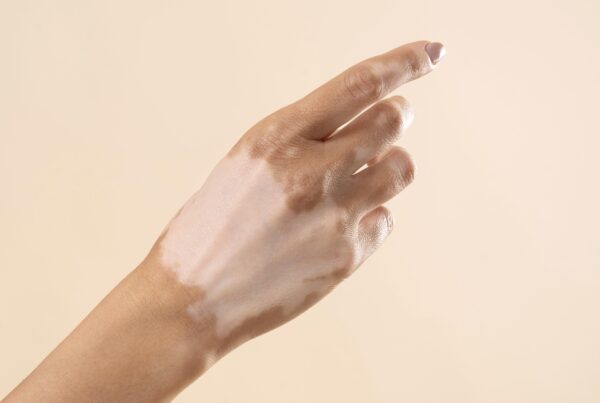

Ruxolitinib is a Janus kinase (JAK) 1/JAK2 inhibitor, a type of targeted immune therapy that interferes with inflammatory signalling pathways involved in vitiligo. Applied topically as a cream (1.5 %), ruxolitinib aims to reduce immune-mediated destruction of melanocytes (pigment-producing cells), potentially enabling repigmentation in people with non-segmental vitiligo.
The topical form of ruxolitinib is marketed as Opzelura® and is distinct from the systemic oral tablets used for other medical conditions (like myelofibrosis or graft-versus-host disease).
How Ruxolitinib Works
Ruxolitinib blocks the JAK–STAT signalling pathway, which plays a key role in the autoimmune mechanism behind vitiligo. By dampening this signalling in the skin, the immune attack on melanocytes may be reduced, allowing some repigmentation over time.
Clinical Evidence: What the Research Shows
The strongest evidence supporting topical ruxolitinib for vitiligo comes from two pivotal Phase 3, randomised, double-blind TRuE-V studies (TRuE-V1 and TRuE-V2), which examined the cream’s safety and efficacy in patients aged 12 years and older with non-segmental vitiligo.
Key findings include:
-
Patients applying ruxolitinib cream twice daily showed statistically significant greater improvement in repigmentation compared with vehicle (non-medicated cream) after one year of use.
-
In this pooled analysis, about 50 % of patients using ruxolitinib consistently reached a ≥ 75 % improvement in facial Vitiligo Area Scoring Index (F-VASI75) at one year.
-
This efficacy was seen across demographic and clinical subgroups, including people of different ages, skin types, and disease characteristics
A long-term extension of the TRuE-V programme also showed continued improvement and a generally favourable safety profile through two years of treatment among participants, with most adverse events being mild and related to site reactions rather than systemic toxicity, an important consideration given concerns around JAK inhibitors in general.
Access in Africa: What’s the Landscape?
Across most of Africa, Opzelura and ruxolitinib cream are not yet widely registered or commercially marketed. Limited formal regulatory approval means there are few structured pathways for clinicians to prescribe it routinely. Most people living in African countries must rely on alternatives such as:
-
Special import licences for individual patients
-
Compounded or generic topical formulations sourced from abroad, though quality and authenticity must be verified rigorously
-
Participation in clinical trials or expanded access programmes, where available
This reality reflects broader challenges in dermatological drug availability in sub-Saharan Africa, where high costs, regulatory delays, and supply chain limitations often slow access to newer therapies.
Important: Always verify legitimacy and licensing when considering medications sourced outside established pharmaceutical supply chains.
South Africa: Current Availability and Access
In South Africa, ruxolitinib cream is not broadly marketed under a registered National Drug Registry number but is available in practice through specific importation routes. Some relevant points include:
-
The South African Medicines Control Council (MCC) (now SAHPRA) allows ruxolitinib (phosphate) import or use under special patient-specific permits for registered healthcare professionals to prescribe.
-
Specialist dermatologists and private prescribers often work with specialised pharmacy import services to supply Opzelura to eligible patients.
This access pathway means that while the drug isn’t in mainstream commercial distribution like many local medicines, it can be accessed legally with a prescription, dermatology involvement, and appropriate import documentation
Practical Considerations for Patients
-
A dermatologist consultation is essential to assess suitability, benefits, and risks.
-
Treatment often involves twice-daily application for many months, and visible repigmentation may take 6 months or longer.
-
Safety monitoring is important due to the immunomodulating mechanism of JAK inhibitors and the potential for localised side effects
Safety Profile: Evidence and Monitoring
While topical ruxolitinib is generally well-tolerated, important safety considerations include:
-
Local site reactions (like acne, redness, or itching).
-
Class-related concerns (from JAK inhibitor groups) about infections, thrombosis, or malignancies observed mainly with systemic use, though such risks are lower with topical administration.
Because of these factors, medical monitoring throughout treatment is standard practice.
Ruxolitinib cream (Opzelura) represents an important clinical advance for non-segmental vitiligo, with robust phase 3 evidence supporting meaningful repigmentation in many patients. However, global access varies significantly:
-
Wide regulatory approvals in the U.S. and EU make the treatment legally available in those regions.
-
Limited formal access in Africa, including South Africa, means specialised import pathways and dermatologist-led care are key to legal access.
If you’re considering this therapy, always consult a qualified dermatologist to understand benefits, risks, costs, and how access works locally.
References
Here are places to link for readers seeking authoritative source material:
-
In-depth clinical data on TRuE-V1/TRuE-V2 and extension studies (NLM PMC article): https://pmc.ncbi.nlm.nih.gov/articles/PMC12033138/
-
FDA and EMA approval summaries (Opzelura brand resources): https://opzelura.com/vitiligo/what-is-vitiligo/
-
South Africa drug database confirmation for ruxolitinib phosphate: https://www.pharmacompass.com/south-african-mcc-mpr-drug-database/ruxolitinib-phosphate
-
Mapping the trail of vitiligo treatment strategies (historical context including ruxolitinib): https://www.tsss.org.za/mapping-the-trail-of-vitiligo-ruxolitinib-as-a-treatment-strategy/