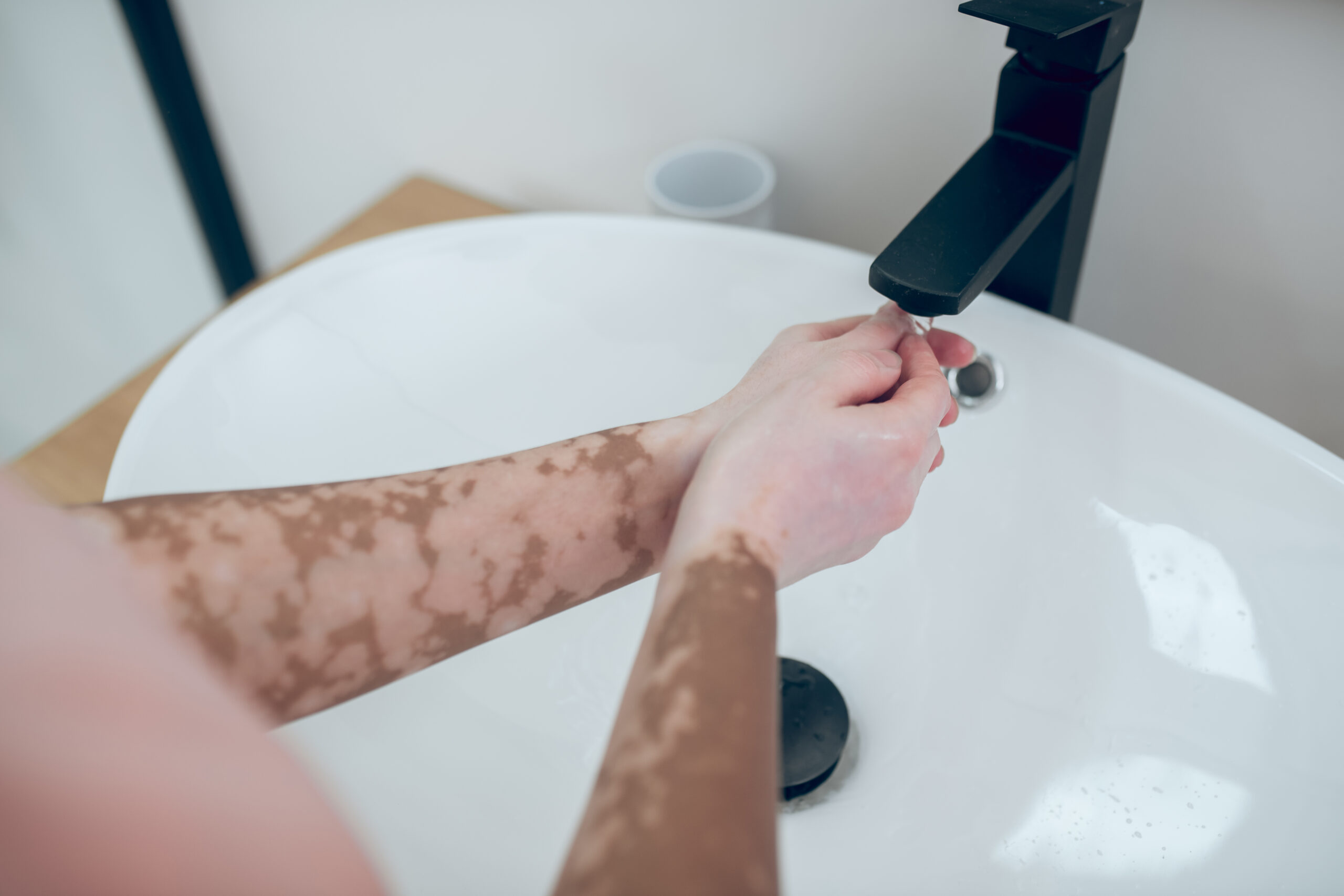

Vitiligo (pronounced: vittle-EYE-go) is a skin disorder that causes depigmentation (loss of
skin color) in irregular patchy patterns. The disorder itself is rare, affecting only about
0.5% to 1% of the world’s population. Though vitiligo is neither fatal nor life-threatening,
there is a social stigma that results in lowered self-esteem among those with the skin
condition. As a dermatologist who has treated many patients with vitiligo, raising
awareness is one way to help dispel the damaging myths and misunderstandings
surrounding this visible skin disorder.
MYTH: People with vitiligo are born with patchy uneven skin because they have mixedrace parents.
FACT: Vitiligo is not related to ethnicity of the parents and most people with it have even
skin pigmentation at birth. Vitiligo is a progressive medical condition that generally
emerges as discolored patches in a young person before the age of 20, though it can
occur in older age too.
MYTH: Only dark-skinned people get vitiligo.
FACT: Vitiligo affects people of all races equally; however, it may be more noticeable in
people with dark skin.
MYTH: Vitiligo is related to other skin diseases such as skin cancer, leprosy, and
albinism.
FACT: Vitiligo is a completely separate condition and not related to skin cancer, leprosy
or albinism. It is thought to be an autoimmune disorder in which the immune system
attacks and kills cells that make skin color, called melanocytes (ma-LAN-o-sites). Though
it may be more common in people with a family history of vitiligo, it can occur in anyone.
The cause of the disorder remains unknown.
MYTH: Vitiligo only affects skin that you can see, such as on faces and hands.
FACT: White or light patches caused by vitiligo tend to occur more commonly in sunexposed areas, such as hands, feet, arms, face, and lips. However, these patches can
also occur in the armpits, groins, eyes, navel, genitals and rectal areas. Similar patches
may also appear on both the mucous membranes (tissues that line the inside of the
mouth and nose) and the retina (inner layer of the eyeball). The hair that grows on areas
affected by vitiligo can turn white as well. For some people, the patches may start out
small and increase in size and number as the disease progresses.
MYTH: Vitiligo is made worse by eating certain combinations of foods.
FACT: Vitiligo appears to be entirely unaffected by food choices.
MYTH: People with vitiligo are often impaired with other physical and mental disabilities.
FACT: Generally speaking, most people with vitiligo are vibrant, normal individuals with a
life-altering, but not necessarily life-threatening, skin disorder. The disease may be more
common in people who have other autoimmune disorders, such as:
Hyperthyroidism—an overactive thyroid gland
Adrenocortical insufficiency—the adrenal gland does not produce enough of the
hormone
Alopecia areata—patches of hair baldness
Pernicious anemia—a low level of red blood cells caused by the failure of the body to
absorb vitamin B12
People with vitiligo should make regular doctor appointments to monitor for these and
other potential conditions.
MYTH: You can predict who will have vitiligo and how extensive the disease will be by
looking at them.
FACT: There is no superficial way to predict who will have vitiligo. The diagnosis of
vitiligo is made based on a physical examination, medical history, and laboratory tests,
sometimes including a biopsy. There is also no way to tell how much or which skin will
ultimately be affected. Vitiligo is usually progressive, which means that over time white
or discolored patches may spread to other areas of the body and become more
extensive. Some people report additional depigmentation following periods of physical or
emotional stress.
MYTH: You can cure vitiligo and return the color to white patches by rubbing a variety of
oils into the skin or taking certain supplements.
FACT: Unfortunately, there is currently no cure for vitiligo, nor is there a convenient,
easy treatment that addresses the disease process. However, there are a number of
therapies that people with vitiligo may try, including: UV light therapy, surgical skin and
cellular grafts, tattooing, steroids, and medications. Also, some people simply opt to
cover their skin with special cosmetics. If you have vitiligo, speak with your doctor to
learn about all the options available to address the color loss of skin. In addition, research
is underway to find better therapies.
MYTH: If you see someone with vitiligo, you should turn the other way because it’s
contagious.
FACT: Vitiligo is neither contagious nor infectious, and there’s no way to get it from
someone else. So, there is no reason to avoid people who may have visible signs of the
disorder. Take part in World Vitiligo Day on June 25th and help to set the record straight
by joining in to raise awareness on the nature of this disorder and helping to fight against
bias and stigma